At a corporate event, a presentation should be more than a slide deck. What appears on the screen shapes how the audience follows the story and remembers key messaging long after the event ends. Even the most compelling speaker can lose an audience when slides are too dense or visually inconsistent. It can make the presentation feel disconnected from the environment.
An effective executive presentation combines content, creative design, visual storytelling, and production technology together around the same goal. When creative and production teams create purposeful elements, the presentation helps the audience connect.
Why Slide Design Matters
Good presentation design isn’t about making every slide more elaborate. It is about making information easier to understand. Corporate events need to move beyond text-heavy slides and bullet points and look towards a more visual communication style.
Thoughtful presentation design creates hierarchy. Typography can direct attention to an important idea. Photography and graphics can communicate concepts quickly. Data visualization can simplify complex information making it easier for the audience to process. Animation can reveal information at the right moment instead of presenting everything at once.
Brand consistency matters, too. Color, typography, imagery, and graphic treatments can make an executive presentation feel like an intentional part of the larger event, not a standalone deck.
The goal isn’t design for design’s sake. Every creative choice should clarify the message and keep the speaker at the center of the presentation.
Use Visual Storytelling to Bring the Message to Life
The strongest presentations start with a clear narrative, not a sequence of individual slides. What does the audience need to understand at the beginning? Where should the story take them? What should they think, feel, or do by the time the speaker finishes?
Once you establish that structure, creative content will move the story forward. Photography, video, animation, motion graphics, and other visual elements can communicate ideas that are difficult to capture through words alone.
Visual storytelling is especially valuable when the subject is complex, or the presentation is long. Changing the visual rhythm keeps the audience engaged by giving them a new reason to pay attention while helping key moments stand apart.
The creative should always serve the story. If an animation looks impressive but doesn’t clarify the message, it adds no value.
Design for the Speaker, Not Just the Screen
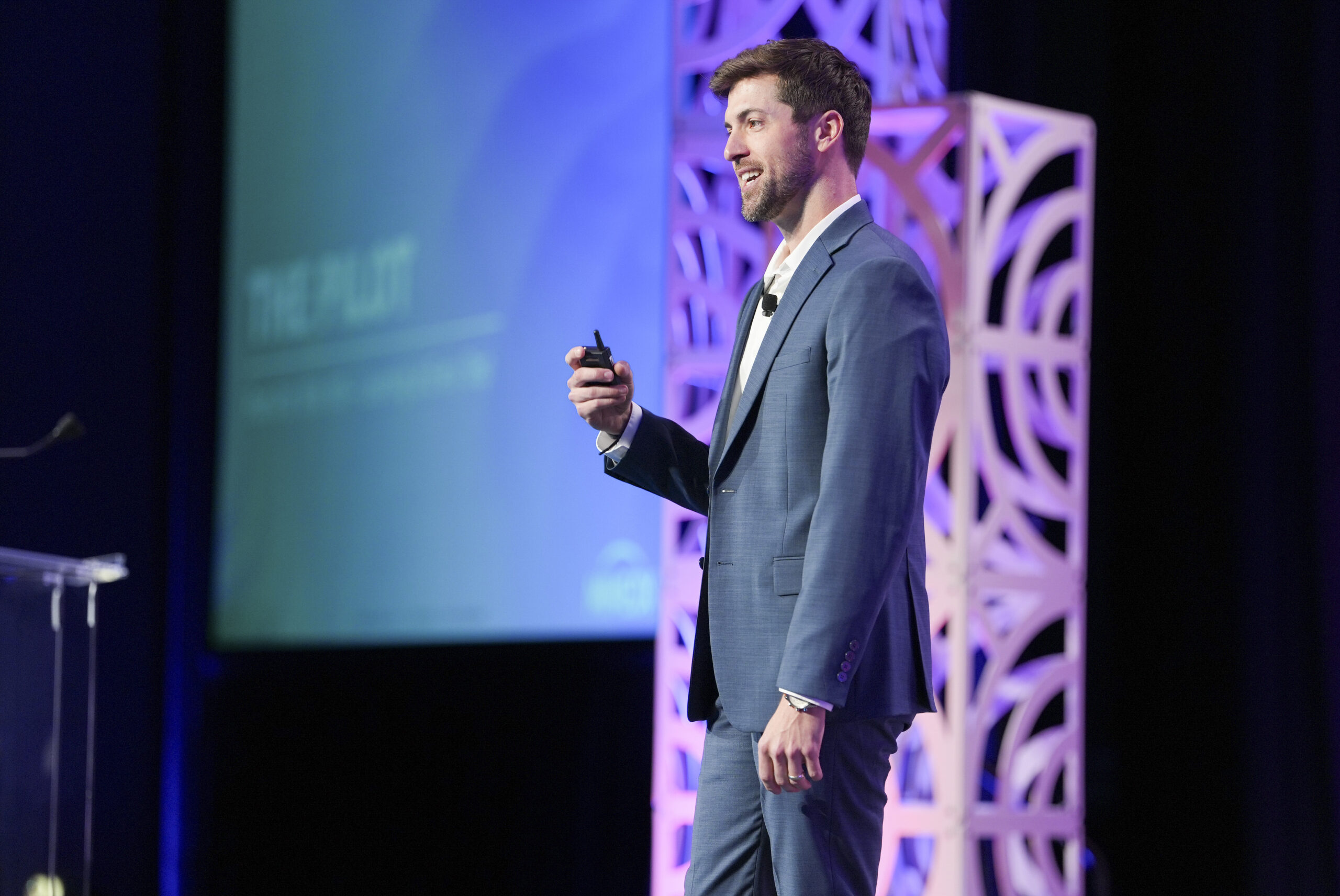
The screen is there to support the presenter. To ensure it doesn’t compete with the presenter, consider pacing, transitions, speaker cues, and how much information appears at any given time.
When every talking point a speaker makes is also written on the screen, audiences are forced to choose between reading and listening. Instead, visuals should reinforce the idea the speaker is communicating. A photograph might create context, while a single statistic can emphasize scale. An animation can illustrate a process, and a short phrase can make the central message stick.
Timing matters as much as design. Builds and transitions should follow the speaker’s natural delivery, while videos and other media should enter the presentation without interrupting its momentum.
That is why early collaboration in event planning and production matters. Creative teams, production teams, and presenters should understand how the content will be delivered and how each element supports the speaker. Rehearsal gives everyone a chance to refine timing, transitions, and cues before an audience is in the room.
Think Beyond the Deck and Design for the Entire Stage
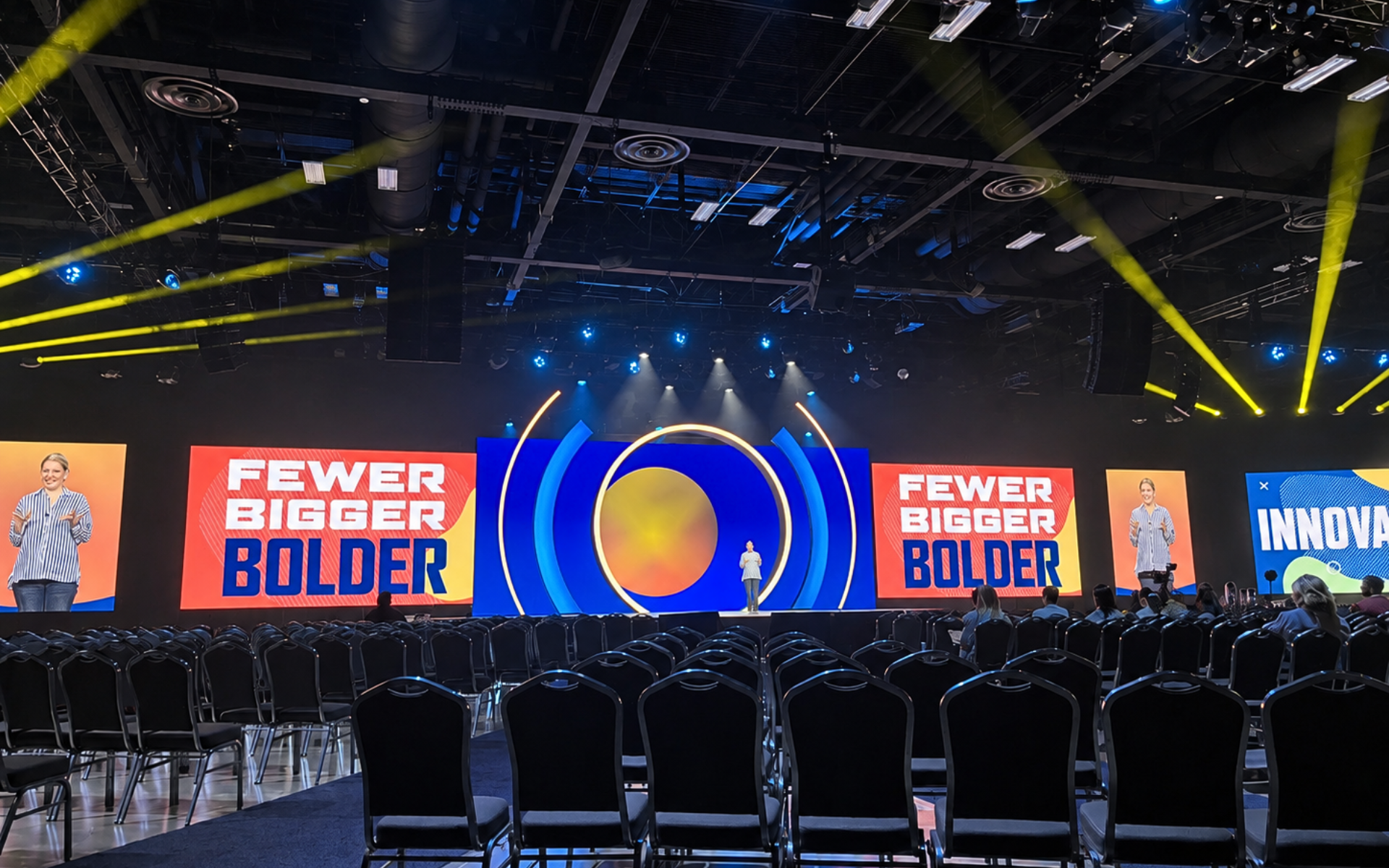
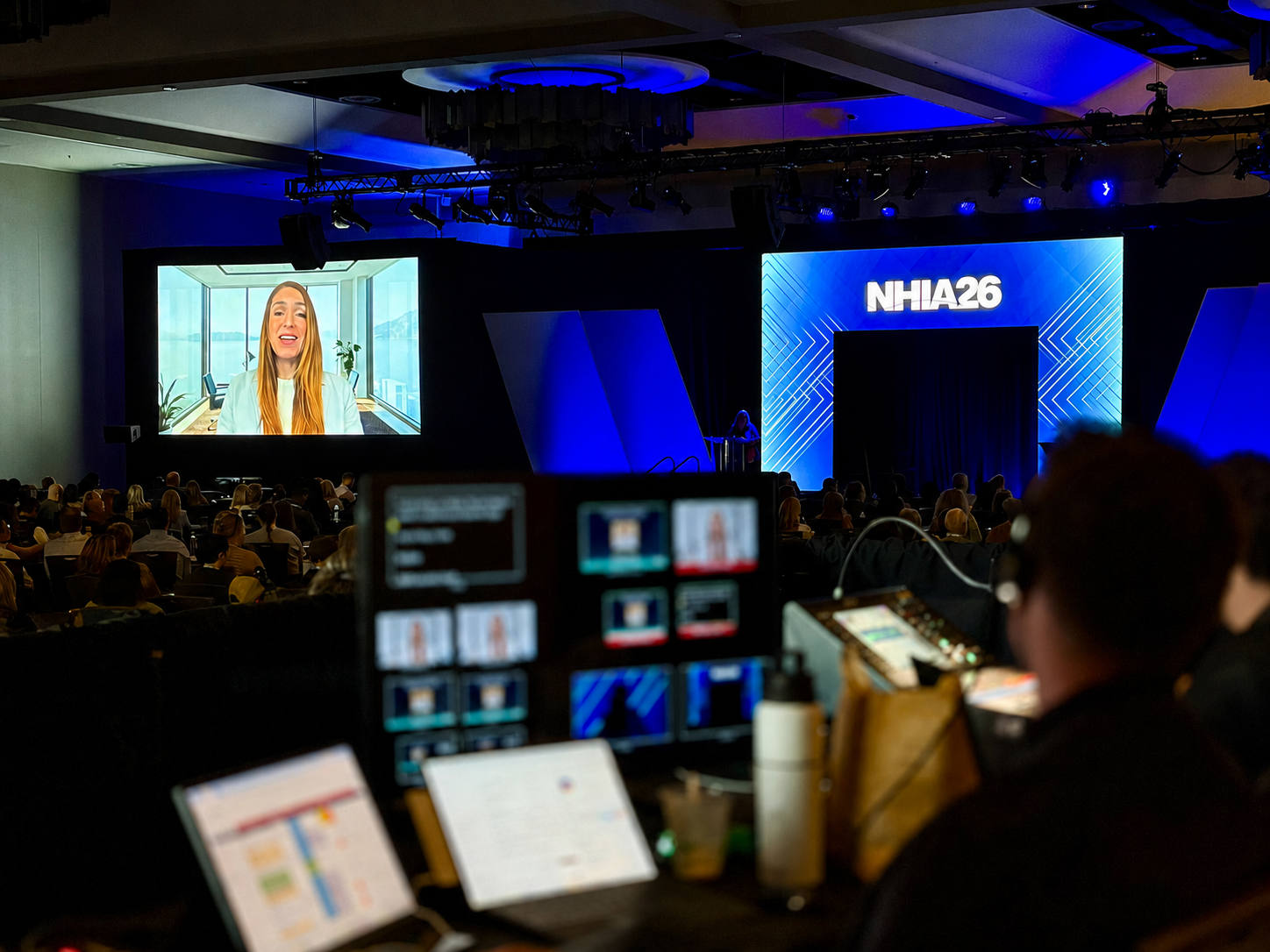
A presentation may be created on a laptop, but that is rarely where the audience experiences it. At a corporate event, content may appear across large LED walls, projection surfaces, confidence monitors, scenic elements, or multiple screens throughout the room. If the event has a virtual audience, that same content also needs to work on a much smaller screen. That is why the environment should influence the creative process from the beginning.
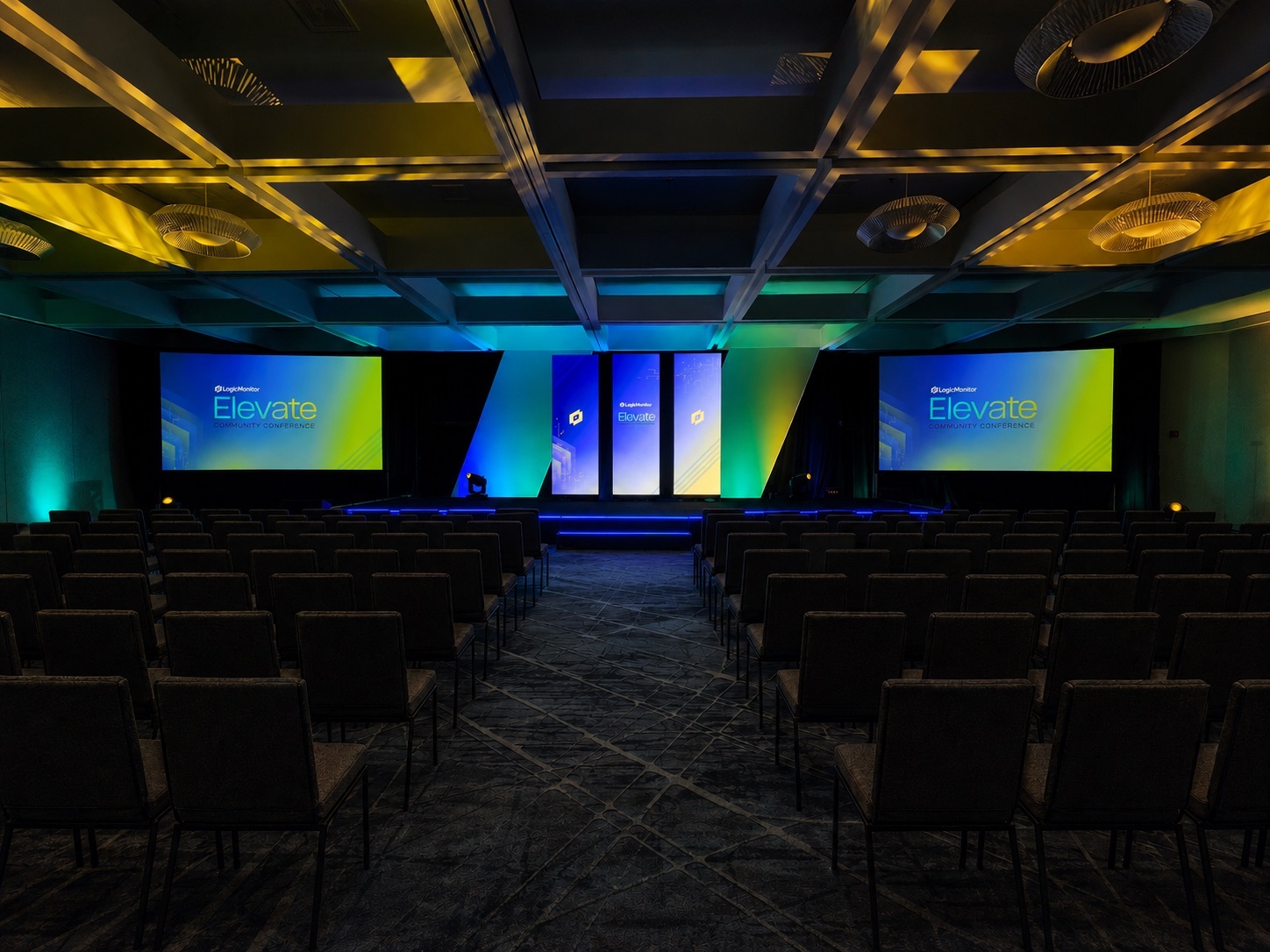
Screen dimensions, sightlines, room size, scenic design, corporate event lighting, and speaker placement affect how viewers see presentation content. A design that works perfectly on a standard 16:9 display may not translate effectively to an ultra-wide LED wall or custom scenic configuration. Simply scaling up a traditional slide deck can leave valuable screen space unused or create a disconnect between the content and the stage around it. Designing for the actual canvas allows graphics, video, and presentation content to become part of the environment.
This is where creative design and AV production work together. When both teams understand the stage, technology, content, and audience, the presentation feels integrated into the event.
Create Opportunities for Audience Engagement
Long presentations ask a lot of an audience. Variety in creative can help maintain the audience’s attention without distracting from the message.
Video can introduce a new chapter of the story. Animation can explain a complex concept. Live polling can invite the audience to participate. Interactive elements can turn a one-way presentation into a conversation. The key is to use these tools intentionally.
Adding a poll to a presentation simply because the technology is available does not automatically increase engagement. Each element should have a clear role, such as introducing an idea, explaining information, creating emotion, gathering input, or resetting the audience’s attention.
Pacing is equally as important. Alternating between a speaker, video, graphics, audience participation, and other forms of content can create a natural visual rhythm, especially during longer general sessions.
Engagement should never become the objective on its own. The best creative choices make it easier for people to connect with the message and remember why it mattered.
Bringing Creative and Production Together
Throughout event planning and production, creative and technical decisions should work together. If the creative team develops a presentation without understanding the stage, screens, lighting, or playback environment, it may already miss opportunities to use the technology more effectively. Bringing the disciplines together at the start lets the team ask better questions. How will the audience see this content? What does the speaker need? Where should attention be directed? Could motion or video communicate this idea more effectively? How should the content interact with the surrounding stage?
The answers connect the executive presentation to the broader attendee experience, from the stage and screens to video, lighting, scenic design, and show flow.
Creative + Production in Action: MiMedX National Sales Meeting
That creative and technical production combination was central to our work on the MiMedX National Sales Meeting, an annual event bringing together 350 sales professionals.
After a challenging year, MiMedX needed to motivate and align its team while communicating important messages transparently. The goal was to elevate the experience without increasing the budget.
Rather than reinventing the event, we focused on strengthening the client’s existing visual identity. Our creative work included presentation template design, motion graphics, video content, and scenic direction. Those elements were carried into the live environment through audio, lighting, video, stage design, and AV production.
Speaker support was another important part of the process. Rehearsal management, graphics coordination, cue-to-cues, and on-site support helped ensure that the creative content worked with each presenter rather than around them.
By approaching the meeting as one connected experience, we delivered a cohesive, high-impact production within real-world budget constraints and helped MiMedX communicate complex messages with clarity and confidence.
Go Beyond Bullet Points
An effective executive presentation is not simply a polished deck. It’s the combination of a strong message, thoughtful design, visual storytelling, a prepared speaker, and production that makes all of those elements feel effortless to the audience.
At Bright AV, we bring creative design and production together so those pieces are considered as one experience. Our creative team supports presentation design, branded graphics, motion graphics, video content, and other visual assets that bring ideas to life.
Our audio-visual production team then brings that creative vision to life through video, screens, lighting, staging, and show production. Because the creative and technical conversations happen together, content can be designed from the beginning for the environment in which the audience will actually experience it.
From initial concept and creative development to rehearsal and the final moment on stage, we work alongside our clients to create presentations that support the speaker, reinforce the message, and keep audiences engaged.
Ready to go beyond bullet points? Connect with Bright AV to see how our creative and production teams can bring your next executive presentation to life.