Successful events don’t happen by accident. They begin with clear objectives, thoughtful planning, and a strategy that aligns content, production, and audience expectations.
Today’s attendees expect more than presentations and packed agendas. They expect experiences that capture attention, create connection, and reinforce key messages. Whether you’re planning a national sales meeting, user conference, leadership summit, or brand activation, the most successful events are built around intentional decisions that support both business goals and audience outcomes.
Creating that kind of impact requires balancing creativity, logistics, technology, and execution from the very beginning. When those elements work together, events become opportunities to strengthen brands, inspire audiences, and create lasting impressions.
Aligning Strategy, Messaging, and Experience
Every successful event starts with a clear understanding of what success looks like.
Before selecting a venue, designing a stage, or building a run of show, event teams should define the event’s purpose, audience expectations, and desired outcomes. Those goals become the foundation for every planning decision that follows.
A strong strategy also creates consistency throughout the attendee journey. Pre-event communications build anticipation. On-site experiences reinforce key messages through content, staging, and audience interaction. Post-event follow-up extends the conversation and helps maintain momentum after the event concludes.
When strategy, messaging, and production align, the audience experiences a cohesive event that feels intentional from start to finish.
Building a Budget Around Audience Impact
Successful events aren’t defined by budget size. They’re defined by how effectively resources are allocated.
One of the most common mistakes we see is organizations investing heavily in production elements before defining the audience experience they’re trying to create. The most impactful events focus investment on the moments that matter most, whether that’s content development, scenic design, audience interaction, speaker preparation, or technology.
A comprehensive event budget should account for production, staging, staffing, content support, travel, logistics, and contingency planning. Establishing those priorities early allows teams to adapt when changes occur without compromising the overall experience.
Working with an experienced production partner like Bright AV can often uncover creative solutions that maximize impact while staying within budget. Strategic planning frequently delivers greater value than simply adding more production elements.
Case Study: Strategic Planning Helped Taiho Create an Engaging National Sales Meeting
Taiho needed to create a National Sales Meeting that balanced complex oncology content with an engaging and energetic attendee experience.
The challenge was clear: deliver educational content in a way that maintained attention and participation throughout the program while preserving the professionalism expected from a national meeting.
Bright AV partnered closely with Taiho’s marketing team to develop a strategy that balanced information-heavy sessions with interactive moments designed to keep energy levels high. Games, puzzles, and “Minute to Win It” competitions were integrated throughout the agenda to encourage participation and create natural breaks between content-focused sessions.
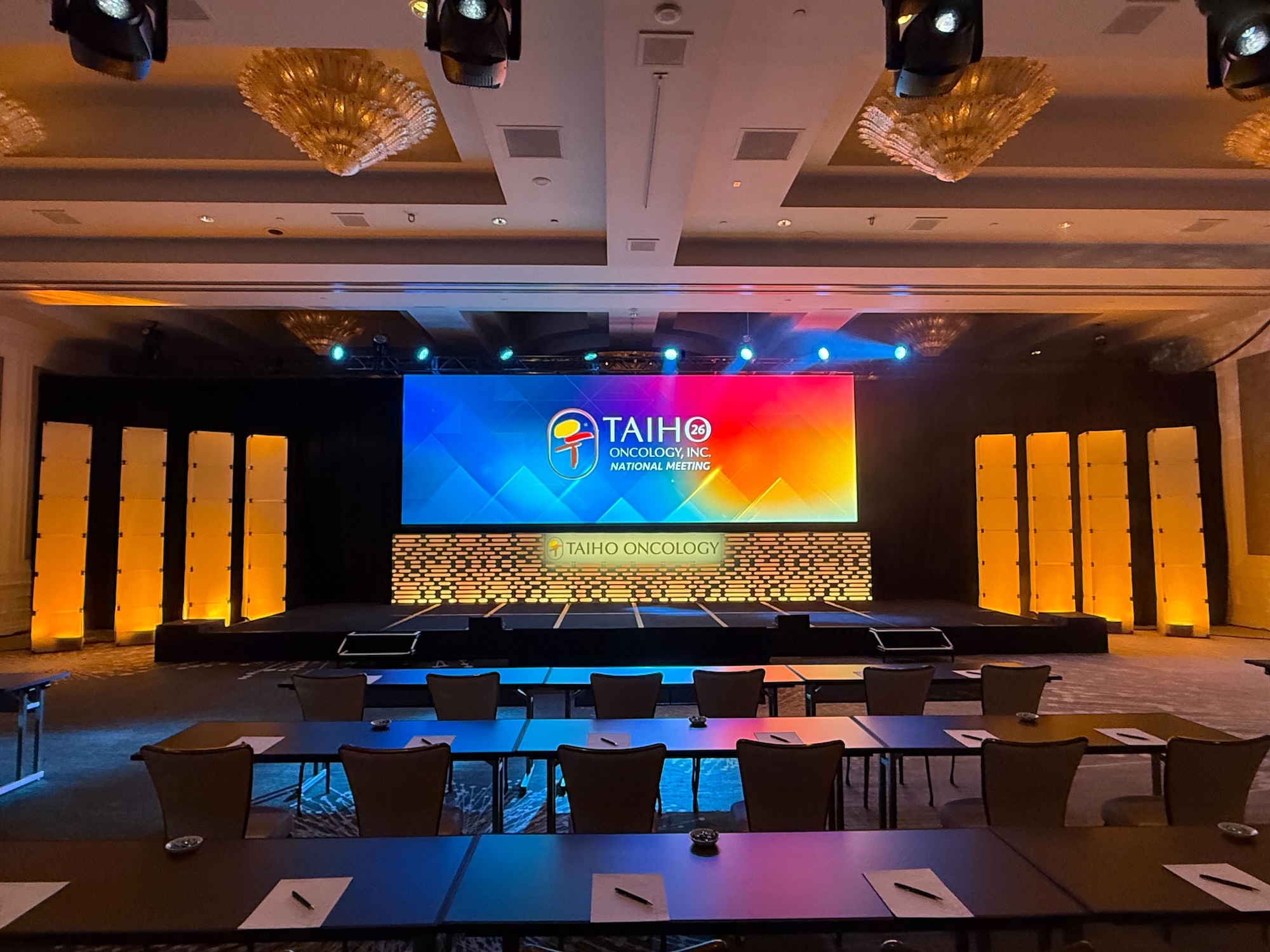
To support the event’s visual identity, Bright AV developed a scenic design that reinforced the event branding while staying within budget parameters. In-house staging elements, LED tape lighting, and a large LED backdrop created an immersive environment without unnecessary expense.
Opening videos, interstitial content, and branded presentations helped create a consistent narrative throughout the event. Rehearsal management, speaker support, graphics coordination, and technical execution ensured every session ran smoothly.
The result was a highly engaging National Sales Meeting, which Taiho recognized as their best stage design to date.
Post-event debriefs provided valuable insight into attendee participation, content pacing, and engagement throughout the program. Those findings helped shape future event planning decisions and reinforced an important lesson: the most successful events continue delivering value long after the audience leaves the room.
Flexibility is Essential During Live Events
Even the most detailed event plans require adaptability.
Schedule changes, speaker updates, technical challenges, and shifting audience needs are all realities of live event production. The difference is not whether challenges occur, it’s how quickly teams respond when they do.
Experienced production teams anticipate potential issues before they arise and build contingency plans into the process. Strong communication, preparation, and collaboration allow
adjustments to happen behind the scenes while maintaining a seamless attendee experience.
Technology Should Support the Story
Technology plays a critical role in modern event production, but its greatest impact comes when it reinforces the story, supports key messages, and enhances the audience experience.
LED displays, lighting, audio, projection, and interactive elements can create energy, guide attention, and bring the event narrative to life when used intentionally. Many of today’s strongest general sessions are paced more like live entertainment than traditional corporate presentations.
Early collaboration between event planners and production teams ensures every technical decision supports the broader event strategy rather than distracting from it.
Strategic Planning Creates Lasting Event Impact
Great events happen when strategy, creativity, and execution work together from the beginning.
From defining goals and building budgets to managing live execution and evaluating results, every stage of the planning process contributes to the overall success of an event.
Organizations like Taiho that invest in thoughtful planning create experiences that strengthen brands, deepen audience connections, and generate value long after the event concludes.
At Bright AV, we partner with organizations to create live experiences that combine strategic thinking, creative production, and flawless execution. The result is more than a successful event, it’s an experience people remember.
Ready to create a more connected and impactful event experience? Connect with our Bright AV team to start planning an event that aligns your goals, engages your audience, and delivers lasting results.